The Land
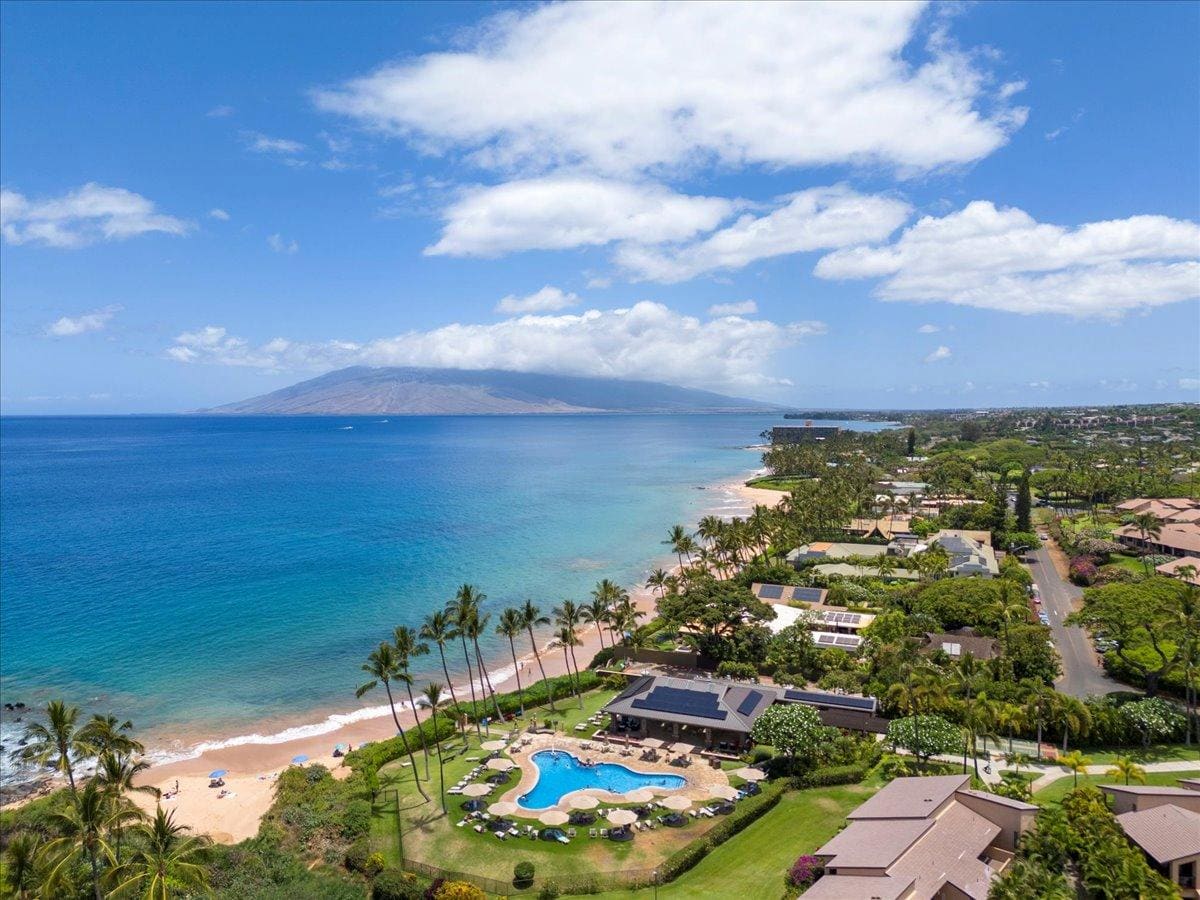
Wailea and Mākena sit on lava flows from Haleakalā, which last erupted around 1790. The area receives less than 12 inches of rain per year — dry and sparsely vegetated by Hawaiian standards. The coastline compensated: reef systems supported abundant fish populations, and the offshore waters are part of the Hawaiian Islands Humpback Whale National Marine Sanctuary.
Hawaiian Settlement
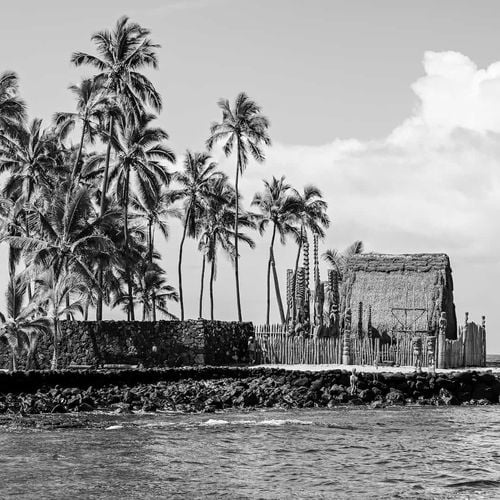
Hawaiian communities settled this coast well before European contact. The ahupuaʻa governing this area was called Wailea — generally understood to derive from wai (water) and lea (pleasure). Communities relied on coastal fishing, dryland farming of sweet potato (ʻuala), and fishponds — enclosures built in shallow coastal waters to raise fish. Remnants of fishpond walls are documented along the coast.
Mākena Bay, known historically as Mākena Landing, supported a significant settlement. The bay’s natural protection from trade winds made it a reliable landing point for canoe travel. Multiple heiau — Hawaiian religious and ceremonial structures — have been documented in the area. Puʻu Ōlaʻi, the prominent cinder cone at the south end of the coast, rises approximately 360 feet and separates the beaches now known as Big Beach and Little Beach.
Whaling, Ranching, and Mākena Landing — 1820s to 1900s
As Lahaina became a major Pacific whaling port, Mākena Landing became an important secondary port for South Maui and the ranching operations developing in Upcountry. Rose Ranch — later Ulupalakua Ranch, established in 1856 — became one of the largest ranching operations in Hawaii. Cattle were driven from Ulupalakua through the Wailea and Mākena area to the landing for shipment. The routes roughly correspond to corridors now occupied by resort roads and golf courses. Ulupalakua Ranch continues to operate today on approximately 18,000 acres.
Japanese laborers arrived in Hawaii beginning in 1885. A number of families settled in the Mākena area, establishing one of the early Japanese Buddhist temples on Maui. Keawalai Congregational Church — established in 1832 — is one of the oldest continuously operating churches in Hawaii and is listed on the National Register of Historic Places.
The Development of Wailea — 1970s
Alexander & Baldwin, one of Hawaii’s original Big Five companies, developed a master plan for a resort community on approximately 1,500 acres of dry coastal land. The approach differed from the earlier Kāʻanapali development — Wailea was planned at lower density, with wider beach setbacks, landscaped corridors, and a preserved coastal access path connecting the beaches.
The first hotels opened in 1976. The Four Seasons opened in 1990. The Grand Wailea and Fairmont Kea Lani both opened in 1991. Residential communities — Wailea Ekahi, Elua, Iki, Ekolu — were developed through the 1970s and 1980s as low-rise, garden-style complexes. Single-family areas in the Wailea 100s through 500s designations followed. Three golf courses were added between 1971 and 1994. The Shops at Wailea opened in 2003.
The Development of Mākena — 1980s
Seibu Hawaii, a subsidiary of the Japanese Seibu Group, developed the Mākena Resort on approximately 1,800 acres. The Maui Prince Hotel, designed by Minoru Yamasaki, opened in 1986. Residential development was deliberately more limited than Wailea — Makena Surf, Polo Beach Club, The Makena, and Na Hale O Mākena are the primary communities. The Mākena Golf and Beach Club operates as a private club.
Mākena State Park
Oneloa Bay (Big Beach) — approximately one-half mile of undeveloped white sand — is one of the largest undeveloped beaches in Hawaii. The waters off Mākena include the Molokini Shoal Marine Life Conservation District, established in 1977, supporting one of Hawaii’s most concentrated marine biodiversity zones.
The Coast Today
Wailea’s five primary beaches and the Mākena State Park beaches remain publicly accessible under Hawaii law. The Wailea Beach Path connects the resort beaches. Humpback whale season — roughly November through May — brings the largest concentrations of North Pacific humpback whales to the waters directly offshore. Land supply is bounded by state park lands, conservation designations, and existing development.
Key Dates
- Pre-contact: Hawaiian settlement, fishponds, heiau along South Maui coast
- 1832: Keawalai Congregational Church established at Mākena
- 1856: Rose Ranch (later Ulupalakua Ranch) established
- Early 1970s: Alexander & Baldwin launches Wailea development
- 1976: First Wailea hotels open
- 1977: Molokini Shoal designated Marine Life Conservation District
- 1986: Maui Prince Hotel opens, designed by Minoru Yamasaki
- 1990–1991: Four Seasons, Grand Wailea, and Fairmont Kea Lani open
- 2003: The Shops at Wailea opens
- 2013: Andaz Maui opens on former Wailea Beach Hotel site
Check out this article next