Two Communities, Different Characters
Wailea
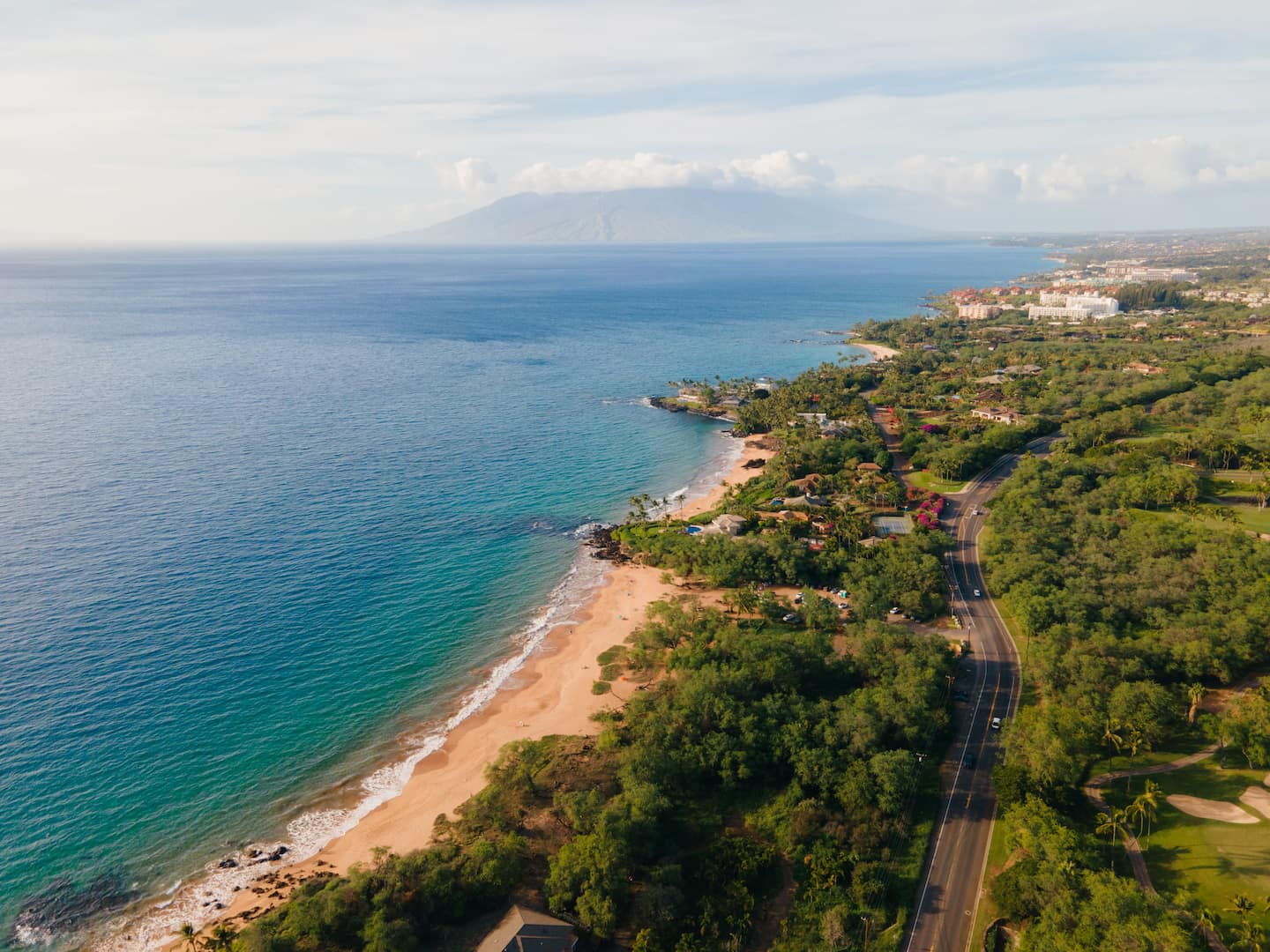
Wailea is a 1,500-acre master-planned community that began development in the 1970s and is now largely built out. The community includes five resort hotels along the coast, three golf courses, the Shops at Wailea retail and dining center, the Wailea Beach Path, and a number of residential communities — among them Wailea Beach Villas, Hoʻolei at Grand Wailea, Papali Wailea, Andaz Residences, Wailea Ekahi, Wailea Elua, Wailea Iki, and Wailea Fairway Villas. Each residential community has its own character, its own ownership structure, and its own approach to amenities.
Wailea is generally walkable. Many properties are within easy reach of restaurants, shops, beaches, and the Wailea Beach Path. The community is active during the day and quieter in the evenings. For buyers who want resort-style amenities close at hand, Wailea offers that.
The five Wailea beaches — Mōkapu, Ulua, Wailea, Polo, and Keawakapu — are all public, as all Hawaii beaches are by state law. Each has its own character and conditions.
Mākena
Mākena is the residential area immediately south of Wailea. There is no commercial center, no walkable retail district, and limited through-traffic. The natural geography contributes to the area's quiet character — Puʻu Ōlaʻi (the cinder cone) to the south, the boundary of Mākena State Park, and the absence of major resort development. The Mākena Golf & Beach Club, operated by Discovery Land Company, is a private members-only residential community within the broader Mākena area. Other residential communities in Mākena include Makena Surf, Polo Beach Club, Na Hale O Makena, and the residential homes in Makena.
Inventory in Mākena is more limited than in Wailea. Fewer properties exist, and fewer trade in any given year. Buyers who choose Mākena typically value the quiet, the natural setting, and the absence of commercial activity nearby.
The Mākena beaches — including Oneloa (Big Beach), Pu'u Ōla'i Beach (Little Beach), and Maluaka Beach — are all public, and Mākena State Park preserves a long stretch of public shoreline access.
How to Decide Between Them
Neither community is "better." They are different choices for different lifestyles. The right fit depends on questions that only the buyer can answer:
- How important is walkability to restaurants, shops, and resort amenities?
- How much daily activity feels right — busier and more social, or quieter and more residential?
- How often will the property be used, and by whom?
- What is the family's relationship with the ocean — daily swimming, occasional beach time, paddling, sunset views from the lanai?
- What does the long-term plan for the property look like — primary residence, second home, family gathering point, eventual succession?
The most useful first step is usually to spend time in both communities at different times of day, walk the streets, sit on the beaches, and notice how each one feels.
Market Data
Year-end and monthly sales statistics for Wailea and Mākena are reported by RAM as part of their MLS resale data. Specific median prices, sales volumes, and inventory counts vary year to year and are documented in the historical market reports on this site. Current pricing for any specific property should always be verified against the most recent RAM-reported data and active listings.
Jolanta's Feedback
The buyers I have known who are happiest in Wailea or Mākena are the ones who took their time, walked both communities, and made the choice based on how each one actually felt to them. There is no wrong answer between the two — only the answer that fits the way you want to live.
Check out this article next