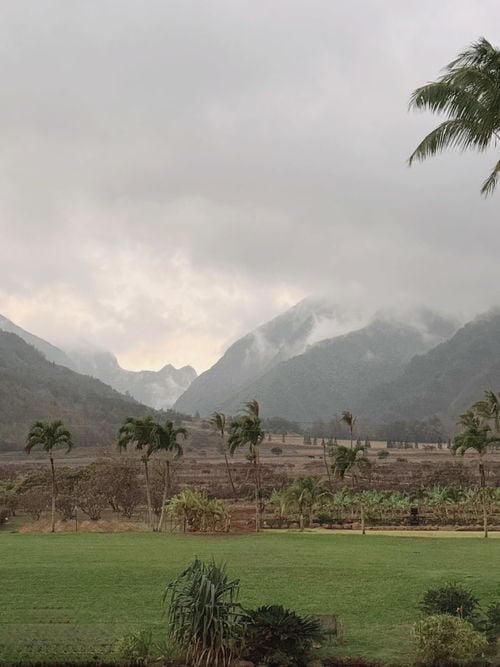
Why Does the Weather Change So Much Across Maui?
Dry Leeward Coast: Kīhei, Wailea, Mākena
The driest part of the island. Wailea averages around ten to twelve inches of rain per year — comparable to parts of Southern California. Warm, sunny, and calm for most of the year. This is the climate most visitors associate with Hawaii, though it is actually closer to a coastal desert than a rainforest.
Wet Windward Coast: Hāna, Keʻanae, Nāhiku
More than two hundred inches of rain per year in some places. True rainforest — jungle canopy, waterfalls, dense green everything. Cool and humid. Could not look more different from Wailea despite being on the same island.
Upcountry: Kula, Makawao, Pukalani
Two thousand to four thousand feet on the western slope of Haleakalā. Cool mornings, warm afternoons, sweater-weather evenings in winter. Rolling pastures, jacaranda trees, small farms. Looks and feels like California wine country. Moderate rainfall, around twenty to forty inches annually.
Alpine Summit: Haleakalā
Above ten thousand feet. Temperatures can drop below freezing at night, even in summer. Snow falls occasionally in winter. The landscape is lunar. Bring winter clothing for the sunrise drive regardless of season.
North Shore: Pāʻia, Haʻiku
Catches the trade winds directly. More rain than South Maui, far less than Hāna. Warm temperatures, steady breezes, frequent brief showers. Windsurfing and surfing country.
Central Maui: Wailuku, Kahului, Waikapū
The isthmus between the West Maui Mountains and Haleakalā. Warm, windy, relatively dry. Where most of Maui’s residential and commercial infrastructure sits.
Why This Matters for Buyers
A home in Kula will feel nothing like a home in Wailea, even though they are twelve miles apart. There is no best region — only the one that suits you. Spend time in more than one part of the island before deciding.
Jolanta’s Feedback
Clients who are happiest with their homes are the ones who experienced more than one part of the island before choosing. I am always willing to spend a day driving you through the climate zones so you can feel the differences for yourself.
Check out this article next